Jedaiah’s Secret

Jedaiah's SecretJedaiah scanned the temple’s hall before slipping his hand underneath his white sleeve. The spots itched more each moment. That morning when they’d met to discuss the accommodations needed for the influx of pilgrims, he’d had to bite his cheek around the other priests to keep from scratching. He’d thought the white spots were merely callouses from working on his house, but then the itching had started.

He stepped onto the ladder. With people flooding into the city for Passover, they all needed to pitch in to handle the hundreds of extra sacrifices. Grabbing a handful of tongs, he balanced them in his elbow and started back down. . .

Click here to read the rest of my story published in the Sacred Cow magazine.

How to Thrive as a Transplanted Wife

How to Thrive as a Transplanted Wife Christopher and I were on our own during our first two years, figuring out how to be newlyweds. I was finishing my last year of college, and then we both got teaching jobs for a year.

We tried to keep up with our families up in Delaware and North Dakota (and siblings scattered from Michigan to Africa), but our social network was made up of college friends and members of the Chinese church we attended.

When the school year ended, we decided to spend some time near Christopher’s family and community as we prepared to move overseas. A year later, we felt the Lord’s redirection from overseas ministry and had to decide where we would live.

I had enjoyed the past year of putting down some roots and getting to know Christopher’s family and community more. I’d never lived in one place more than seven years, so we decided to stay put.

It’s been almost three years now since moving here–good, hard, fun, exciting, vision-searching years. God has continued to lovingly draw me out of my comfort zone as I’ve begun to find my place here.

Here are a few things I’ve learned since being transplanted into my husband’s community:

How to Thrive as a Transplanted Wife 1. Relationships take time.
When I was living in a college dorm, everyone had to actively make friends or have none. Friendships were measured by the semester, and I had to figure out who I was going to keep up with once graduation happened and everyone scattered across the world like confetti.

The ground felt much more solid when we moved to the same town where Christopher’s great-great grandparents had lived. I noticed that there wasn’t as much of a rush to deepen relationships as on the college campus. Interactions felt more like a slow cooker than a microwave.

I had to learn to relax in these new relationships and enjoy the seasoning process.

2. His family isn’t mine (and that’s okay).
I’m so grateful for my in-laws and the life perspective I get when I’m with them. It helps me understand my husband better and be more accepting of traditions and ways of doing things as we build up our own little family. (Things like adding seasoned salt to popcorn, singing before meals, and appreciating a well-told story.)

At Christmas, we spent some time with my family and Christopher said, “You’re like a totally different person with your family.” My counselor reminded me that I had a whole lot more shared experiences with my own family, and as I get to know my in-laws better, I’ll grow into my place there, too.

3. There’s nothing wrong with observing (or not knowing).
Sometimes when I was in a group setting, I worried about not contributing to the conversation. I feared they thought I was rude. I had to learn that it was okay to enjoy breathing the same air and just listen.

And when stories were told from “before my time,” I could appreciate the history of the place I’m living.

4. I have the unique opportunity to enjoy and bless other transplanted wives.
I’ve found that there can be a certain camaraderie between other transplanted wives if we are only brave enough to share our experiences with each other. And what a relief to know I’m not the only one who doesn’t know how everyone is related.

It’s also a good excuse to be the one to welcome someone who is even newer to the community than me. We can even relate to missionaries who are coming back to the States and finding their place in the culture and community again.

How to Thrive as a Transplanted Wife 5. My friends aren’t all my husband’s friends.
Shortly after we moved here, I started a women’s prayer group at my house. I made additional friendships through church and other mutual friends.

When I had a baby, I got to know women who had already been wiping up sticky floors for a few years. Christopher got connected with friends who play music and enjoy board games.

It’s been a blessing to feel the freedom to pursue friendships individually and as a couple.

6. I can enjoy new ministry pursuits.
When I lived in North Dakota in high school, I regularly played on a worship team at church. In South Carolina, I taught 3-5th grade Sunday School for three years. When I moved here, I was able to start fresh and ask God where I would best fit at this stage in my life.

7. Being bold brings blessing. (Do you like that alliteration?)
I’ve need this pep talk regularly. When I’ve quit worrying about how I’m being perceived and shared my own life and struggles with others, it’s opened up the way for others to do the same. It doesn’t matter that we didn’t sit next to each other in kindergarten or that we didn’t graduate from the same high school. Maybe we can’t laugh over shared memories yet, but we can enjoy life right now and listen to each others’ histories.

So if you’re a transplanted wife, know that there are others in the same canoe. We might just be too shy to say anything yet.

On the other hand, if you’ve been planted in the area your whole life, we can’t wait to get to know you, too, (and hear some embarrassing stories about our husbands.)

What have you learned as a transplanted wife?

Why It’s Not Your Job to Prevent Pain

Why It's Not Your Job to Prevent PainA couple weekends ago, my husband planned a trip to Ohio to visit one of his friends and wanted to take our son along (8 hours away, if you calculate it without a toddler in the back seat).

It was going to be the first time in 19 months that I’d be baby-free for more than a few hours.

It terrified me to think of not being there to anticipate my son’s needs, put him down for a nap, comfort him, or make sure he ate some vegetables.

What if he cried in his carseat for hours?

What if he wouldn’t go to sleep in a new place?

What if he stole toys from their little girl?

What if he experienced (gasp) pain?

It caused me to question some of the beliefs I didn’t know I had:
1. It is my job as a wife and mother to try to keep my husband and child from feeling pain.
2. I need to do everything I can to prevent anything bad from happening.

What if I failed?

Occupation: Pain Prevention Squad
Sometimes, when we see those we love going through difficulties, it feels like we’re the ones with the hangnail being ripped off.

We wish would could take it away or even take it on ourselves.

But God has never shied away from pain, because there is something He values even more than our comfort.

  • Joseph was falsely accused and thrown into prison. (Genesis 39)
  • The prophet Isaiah was told no one would listen to his message. (Isaiah 6)
  • Daniel kept praying to God despite a king’s edict and was thrown into a lion’s den. (Daniel 6)
  • John the Baptist lost his head because of his preaching. (Mark 6)

Why It's Not Your Job to Prevent PainGod wants our hearts–and the hearts of everyone around us. He was willing to send His own Son to die an excruciating death so that we could be His sons and daughters. And, like a loving parent, He wants us to experience His spiritual blessings.

According to Ephesians 1, God . . .

. . . chose us before the creation of the world to be holy and blameless in his sight

. . . adopted us as his children

. . . lavished us with grace with all wisdom and understanding

. . . redeemed us through his blood

. . . forgave our sins

. . . worked everything out according to his will so that we could bring him glory

. . . marked us with a seal, the Holy Spirit, guaranteeing our inheritance in heaven

2 Corinthians 4:17-18 says, “For our light and momentary troubles are achieving for us an eternal glory that far outweighs them all. So we fix our eyes not on what is seen, but on what is unseen, since what is seen is temporary, but what is unseen is eternal.”

Our pain has a purpose. My child’s pain has a purpose. I may not see it on this side of eternity, but if my son’s pain causes him to see his need for Jesus, I’d much rather he experience spiritual blessings with pain than live a comfortable life.

Why It's Not Your Job to Prevent Pain

C.S. Lewis, in his book, The Problem of Pain, says that “pain insists upon being attended to. God whispers to us in our pleasures, speaks in our conscience, but shouts in our pains: it is his megaphone to rouse a deaf world.” 
If I believe I serve a loving Father, who delights in His relationship with me, I can crawl into His arms, knowing that he may be using our family’s pain in any number of ways. . .

. . . to refine us.

. . . to protect us from further pain.

. . . to grow us.

. . . to guide us.

Sometimes our fear of pain can eclipse the rays of blessing Jesus wants us to feel.

When I was able to lay my fears in Jesus’ capable arms, I was free to enjoy the gift of solitude while my family was away. Isaiah got some really special “Daddy time,” learning how to communicate with him without Mommy intervention. Everyone came back in one piece. And I got the chance to see how efficient I can be when I’m alone in the house–and that I don’t care to.

I’d much rather trip over toys on the floor than be able to see what color the carpet is. I’d rather cook meals that get devoured in ten minutes than have no one to cook for. I’d rather risk pain than abandon my relationships to avoid it.

And seriously, who doesn’t like to listen to little-boy animal and truck sounds all day long?

Spirit, please lead us out of our fear of pain and into a place of trust. Please take our painful experiences and make something beautiful out of each one. You are worthy.

How to Jump Out of the Comparison Trap

How to Jump out of the Comparison TrapHer children are so much better behaved than mine.

She works full-time and still finds energy to bake cookies for the kindergarten class.

At least I don’t act like her.

Do you wish you could escape from the running commentary in your head?

I used to think that I should be much more concerned about my outward actions than what was bouncing around in my thoughts. After all, who was I hurting if I didn’t voice my judgments out loud?

Like a weak seam, every time I chose to compare myself with someone, a piece of my heart would tear a little more. As the hole widened, it allowed more and more destructive thoughts through. I figured that if I felt guilty enough, I could whip myself into shape.

But it only grew worse.

Timothy Keller, in his book The Freedom of Self-Forgetfulness, says that “the way the normal human ego tries to fill its emptiness and deal with its discomfort is by comparing itself to other people. All the time.”

I couldn’t change my behavior until God led me to the root of the problem: my nature without God.

This nature has a best friend called Pride.

Keller says that “spiritual pride is the illusion that we are competent to run our own lives, achieve our own sense of self-worth and find a purpose big enough to give us meaning in life without God.”

How to Jump out of the Comparison TrapIsn’t that what Adam and Eve ultimately wanted when they said they wanted to be like God? (Genesis 3:4) If they were like God, would they need Him anymore? If we were better than everyone else, would we?

Keller quotes from C.S. Lewis’ Mere Christianity, saying that “Pride gets no pleasure out of having something, only out of having more of it than the next person.”

Better is only better if we become the best. Think of someone really successful–what happens if they don’t maintain their current level of perfection? Sounds exhausting, doesn’t it?

For a while, I tried to just ignore my thoughts. That worked about as well as climbing Mt. Everest in a swimsuit.

I needed an identity change. Keller reminds us that “it is only in the gospel of Jesus Christ that you get the verdict before the performance.”

We can’t do it on our own. But because of Jesus’ death and resurrection, paying the price for our sins, we don’t have to. Romans 8:1 says “there is no condemnation for those who are in Christ Jesus.” He has become our righteousness, so when the Father sees us, He sees Jesus’ perfection. Because we are identified with Jesus, the Father’s verdict “You are my beloved child in whom I am well pleased” applies to us as well (Matthew 3:17).

Keller explains that the apostle Paul, by calling himself the chief of sinners, acknowledges his sins but does not connect them to himself and his identity. Neither does he connect his accomplishments to this identity.

When our identity is not based on our performance, we can grow in gospel humility.

Keller puts it well when he says that “The thing we would remember from meeting a truly gospel-humble person is how much they seemed to be totally interested in us. Because the essence of gospel-humility is not thinking more of myself or thinking less of myself, it is thinking of myself less. . . I stop connecting every experience, every conversation, with myself.”

It’s not about me or them. It is only from this place of security that we can join in the fight for our thoughts. Here are some things that have helped me when unhealthy thoughts come knocking.

1. Remember it is a constant battle.
There have been times when I felt I could never change. Knowing it is a constant battle has helped, especially when I remember the Spirit is on my side, interceding on my behalf (Romans 8:26).

2. Practice the discipline of stopping your thoughts.
This isn’t something we can grit our teeth and do. After we ask for and accept God’s forgiveness, we can say, “I don’t want to go there, God,” knowing He’s the One who can bring true transformation.

3. Ask for God’s vision and perspective.
Sometimes, we can’t see the light at the end of the laundry or our thought patterns. My mentor challenged me to pray, “Jesus, please minister to me” when I feel stuck. Flip through the book of Psalms, and you can find countless cries for help. God always hears.

4. Talk to yourself.
K. Donovan, in her book Growing Through Stress, cited Martyn Lloyd Jones as sharing about the importance of “talking to myself instead of listening to myself talking.” When I let my mind roam free, it is easier to let destructive thoughts in. If I am proactively thinking about God’s promises and truths, it will leave less room for the other thoughts.

How to Jump out of the Comparison TrapAnd in the mornings when I’m so tired I can’t remember if I’ve showered or not, sometimes I need to listen to others speak the truth to me through online sermons, audio Bibles, and womens’ conference talks. (Click on the bolded words for some links.)

5. Give thanks.
Is there some way I can thank God for the person I find myself thinking about? Maybe I can say a quick prayer for them. Appearances can be deceiving.

Sometimes it also helps to just start telling God everything I’m thankful for.

Timothy Keller’s short book, The Freedom of Self-Forgetfulness brought so many of these concepts together for me in a clearer way than I’d ever heard before. It takes about an hour to read, and you can find it here.

And if you’d like to share some of these truths with the children in your life, you can check out Max Lucado’s “You are Special” here.

Carolyn Mahaney also wrote an excellent post on comparison entitled, “A Loving Rebuke.” 

Only God can change our comparison to blessing. Fight in His strength.

5 Ways to Pray With Hope

Praying With HopeDo you ever feel like you’re praying on autopilot?

I try to pray with my son before his nap each afternoon. Often it sounds something like this: “Dear Jesus, please give Isaiah a good rest, so that he can wake up refreshed, (so he won’t be fussy and I can get lots of stuff done).”

One afternoon at the end of my prayer, as I left my son to continue playing with his toy smartphone in his crib, I felt God asking me what else I wanted Him to do in my son’s life.

Henri Nouwen, in his book, With Open Hands, says, “The prayer of little faith makes us cling to the concrete circumstances of the present situation in order to win a certain security. . . wishes which beg for immediate fulfillment.”

Sometimes, my days alternate between feeling sorry for myself (when there’s a huge pile of dishes to be washed, child throwing a tantrum, or my efficiency plans get tossed in the trash) and feeling sorry for others (when my brain stops long enough to realizes there are other people around me and around the world who are going through unimaginable hardships).

When I pray, I want to see God act. “Help the people affected by the earthquake in Nepal. Let things go smoothly with my friend’s delivery. Heal my mom’s foot pain.”

Praying With Hope
But what if God doesn’t seem to be answering? Part of living a life of faith involves praying with hope.

Praying With HopeNouwen says, “If you pray with hope, all those concrete requests are ways of expressing your unlimited trust in God, who fulfills all promises, who holds out for you nothing but good, and who wants to share goodness and love with you.”

He goes on to say that “Our numerous requests simply become the concrete way of saying that we trust in the fullness of God’s goodness. . . expressing an unlimited faith in the giver of all good things” (p. 46).

So how do we pray with that kind of hope? Dictionary.com uses words like believe, desire, trust and rely when defining the word hope.

Hope and faith go hand in hand. Hebrews 11:1 says that “faith is being sure of what we hope for and certain of what we do not see.”

According to Nouwen, “Hope includes an openness where you wait for the promise to be delivered., even though you never know when, where or how this might happen” (p. 43)

Praying With HopeIt’s easy to hope in things we feel are under our control–our home, children, work, even the reliability of our car. These securities can cause us to forget the One who is in charge of it all. When the roadblocks do come and our feelings of control are shattered, our loving Father is always there with His arms out to welcome us back to His peace.

When we practice praying with hope in God, the roadblocks we encounter can draw us into even deeper intimacy with Him.

One way God has guided me in prayers of hope is through focusing on what He’s already started doing in the world. Here are five areas we can pray with Him.

1. For unbelievers to know Him.
Tragedies occur every second of every day. Natural disasters and evil people make others suffer and die. We live in a broken, sin-stained world. But since the beginning of time, God’s desire has been for people to know Him. As we pray for deliverance, comfort and relief for those in pain, we can also pray that through it people would know Jesus. We can even pray for terrorists, dictators, and murderers to be brought to their knees in surrender to Christ.

2. For people to remember Him.
We are forgetful people, and pain can shock us into remembering who is really important. I don’t need to pray for my son’s life to be hard. It will be. But I can ask that God would use his hardships to draw him closer to Jesus.

Praying With HopeSome of my friends have recently had babies. I’ve prayed that the babies would sleep well at night and cry less. I’ve prayed for healing in the mothers and protection from depression. But nothing can prevent it from being a hard season, so I can also pray that in all the difficult moments, these moms would feel God’s presence with them. I can pray that as their babies need them constantly, they would be reminded of their need for Jesus.

3. For daily communion with Him.
Many times we can’t relieve people’s struggles. It’s impossible for life to be easy for my friends living overseas. Language, cultural blunders, and going from shop to shop just trying to find floss is exhausting. I pray for deliverance from their current struggles. But I can also pray that through the challenges, they would have a deeper communion with Jesus.

4. For Him to use us to shine His light and glory to the world.
We are jars of clay (2 Corinthians 4), and God often uses our broken places to shine His light. When we are vulnerable enough to share our struggles with other people, it gives us the chance to point to Jesus.

We serve a Savior who was perfect so we don’t have to pretend we are. Instead, we can pray that God would use our experiences in the daily grind of life to show others His greatness. And why not even thank God for how He’s going to display His glory through people we’re trusting Him to bring to the faith?

Praying With Hope5. For us to live in the hope of heaven.
No other religion can offer this sure hope to those who only see suffering ahead of them on earth. When my son cries, it seems like the world has been drained of all happiness. When I read the news, I often wish I hadn’t. The suffering is too much to imagine.

Whether the pain is slight or suffocating, God is always there, holding out the hope of eternity. It’s always within reach.

Nouwen reminds us that, “Prayer is a way of life which allows you to find a stillness in the midst of the world where you are open to God’s promises, and find hope for yourself, your neighbor, and your world” (p. 79).

Let’s ask God to guide us in that hope, so that we can delight in Him as we share it with others.

From Pain to Freedom

God’s Healing from a Decade of Pain and Worry
From Pain to FreedomEighteen months ago, our son took his first breath. He has learned so much since then–smiling, laughing, rolling over, sitting up, eating solids, crawling, talking, walking, and now climbing. When he was born, I couldn’t picture him doing all the things he can do now. Neither could I have imagined the journey of healing from physical pain and worry God would take me on as my son was experiencing each baby milestone.

My physical pain started back in high school. . .

Click here to read the rest of the article.*

*This article was originally published as the May 2015 Rosedale Bible College feature in the Beacon, the newsletter of the Conservative Mennonite Conference.

3 Reasons Why It’s Good To Make Mistakes

I used to not forget anything.

Why It's Good to Make MistakesAnything, that is, that had to do with events/times/dates/etc. I’d write things on our calendar, set timers, write sticky notes, and even text myself. My weird personality and subconscious would hold hands and swim around inside my brain, whispering reminders in my ear as I was going to sleep.

“Don’t forget about that family dinner next Friday. . . Remember to turn on the crockpot as soon as you wake up.”

It was a source of pride.

And then we had a baby.

He wouldn’t nap to a timer, and the sticky notes kept falling off him. I forgot about his two-month check-up until it was too late. I missed a scheduled phone call. I’d walk into a room and beg my brain to remember what I came in there for. I felt like even my strengths were slipping away because of this little person.

Which was good, because it started to challenge beliefs I never knew I had.

I used to think: Mistakes = Sin.

Why It's Good to Make MistakesI didn’t make much of a distinction between being a finite human and being a sinner.

We are broken people living in a sin-stained world. This affects everything we do, including our mistakes. But that doesn’t mean every mistake is a sin.

My son is learning to drink milk from a cup. Sometimes it dribbles down his chin and splatters onto the table and floor. I don’t cry over it. And I don’t think Jesus cries over our spilled mistakes, either.

Before the Fall, Adam and Eve weren’t God. Even when we get to heaven, we won’t automatically know everything. We are human.

When mistakes are sin
Sometimes our mistakes do involve sin, though. It used to come naturally for me to feel guilty and abuse myself through my thoughts.

“Won’t you ever learn?”

“What’s your problem?”

It felt like some sort of penance. It was wrong.

Instead, God calls us to repent, ask for forgiveness (and the Spirit’s help), and then bask in the grace He offers because of Jesus’ death on the cross. Jesus has paid the price for all my fallen-ness and sinful mistakes.

So what is the alternative? What should replace the feelings once heavy with guilt, the you’ll-never-be-good-enough accusations in my head?

Recently, I felt the Spirit prompting me to consider what would happen if we weren’t aware of our mistakes. What if we were perfect in our own eyes?

It brought to mind the phrase in Judges, where the people of Israel “did what was right in their own eyes.” (Judges 17:6) When we think we have it all together, pride can creep in, and even unbelief (depending on myself for everything).

Here are three reasons why I’m glad God let’s me make mistakes.

Why It's Good to Make Mistakes1. Remembering my need for Jesus

When everything is going well, we say we have it all under control. But what exactly do we have under our control? A clean house? Obedient children? Appearances can be deceiving.

So many people don’t acknowledge that God is the One who gave them life, allows each breath, and orders the universe. If we don’t take moments to remember, we may start to look and live like them. We may start to think we can do life without Him if we can just organize, plan, and do better.

2. Opportunity to grow in humility

It’s always been hard for me to try things I don’t anticipate doing well at. (You can imagine what the gym class skills tests did to my insides.) Parenting is an everyday reminder of my need for Jesus. Sometimes the day is filled with mistakes, and sometimes it’s just plain messy.

At times, I feel like I’m kicking and screaming my way into sanctification. But it’s in those times of insufficiency, I see my own insignificance.

3. Time to focus on the perfection and all-consuming grace of our Father

I don’t have to be perfect. Jesus doesn’t expect it, so I shouldn’t either. God sent Jesus to live the perfect life so I don’t have to. He knew I never could.

No matter how many stifled laughs or raised eyebrows I encounter (or fear encountering), I can choose to accept the grace the Father longs to give me–no matter how many times I face-plant.

Mom Enough (Free Book!)

Mom EnoughWhy does being a mom have to be so hard?

Why do some moms make it look like baking brownies from a box?

Have you ever felt like you don’t have what it takes?

Sometimes I’m tempted to think of motherhood as one more item to check off my list by the end of the night (or through the night).

It’s easy to lose the sacredness of shaping a soul when the dishes are crusty and the floors are gritty.

When he shouts, “No!” for the hundredth time today and begs constantly for Cinnamon Toast Crunch.

Our culture values condoms over pacifiers, freedom over responsibility, independence over self-sacrifice. The sweet looks my son gets at the grocery store make me almost forget the cultural values we are going up against when we seek to raise our children in the light of the gospel.

If only that were our only problem.

Ephesians 6:12 says, “our struggle is not against flesh and blood, but against the rulers, against the authorities, against the powers of this dark world and against the spiritual forces of evil in the heavenly realms.” 

Souls are at stake in this war.

I need constant reminders of my calling as a mom. Otherwise, the distracting voices shouting at me to be “supermom” start to sound logical. I lose focus.

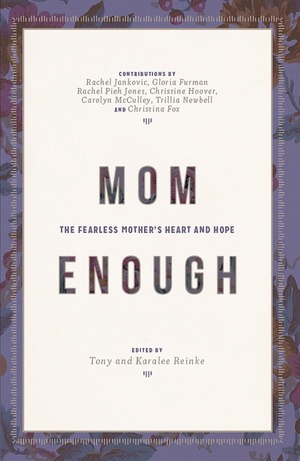
Mom EnoughMom Enough: The Fearless Mother’s Heart and Hope is a collection of articles by women who are in the trenches, seeking to raise their families in the truth of the gospel. I’ve been reading one article each morning as part of my devotions, and God has used it to renew my mind (Romans 12:2) in this wearying season of motherhood. You can download it for free here.

Rachel Jankovic, mother of six, brought tears to my eyes as her article reminded me that “motherhood is not a hobby, it is a calling.” She wrote the first article in the book, but you can also read it here.

Do you have what it takes to be a mom?

Mom EnoughI sure don’t.

Rachel Pieh Jones, shared that “God is, always has been, and always will be, God enough. The battle is over whether or not I will believe it, whether or not I will delight in God’s enough-ness.

“And somehow, in God’s mathematics of grace:

“Mom (never enough) + God (infinitely enough) = Mom enough.

“Mom enough to believe and to be called Chosen, Daughter, Righteous, Honored, Heir, Forgiven, Redeemed.”

Jesus is the only source of true satisfaction in motherhood and in every other part of life. Let’s be the little reminders in each others’ lives as we look to the One who is infinitely enough.

7 Things to Do When Your Husband is a Dreamer

When Your Husband is a DreamerI’m married to an external processor.

Whenever my husband proposes that we change something, I feel like tiny ants have burrowed under my skin and are trying to wriggle their way out.

Because staying the same feels so much safer.

If I come up with an idea, I usually think about it for a while before telling anyone, making sure my ideas and dreams make logical sense in my own mind. When I do spill my thought beans, I’ve already weighed a number of pros and cons. Basically, I’m secretly hoping for a stamp of approval when I present my idea, tied with a pretty red bow.

Now if I were a hermit, this plan would work perfectly, but relationships tend to throw a socket wrench in my thought-out plans.

I’m so thankful for the wrench called Christopher. He’s strong in a lot of areas I’m not. His passion for life and easy-going spirit are two qualities that first attracted me to him.

The trouble comes when he excitedly shares an idea with me and I think he’s thought through it the same way I would have. I go into panic mode, and as my face registers horrified shock, I see him begin to deflate.

Here are seven things I’ve tried to do when I feel the fear pushing out its ugly head.

When Your Husband is a Dreamer1. Listen
I don’t usually think of myself as someone who interrupts, but when I get scared and our future is involved, my tongue starts flapping with objections before my husband can even finish his sentence. As women, we long for security, so it’s a legitimate feeling, but one of the ways we can show respect to our husbands is to really listen (rather than spending most of the time figuring out what we’re going to say next). Like Jasmine, we can step onto our Aladdin’s magic carpet and try to enjoy the scenery of his dreams.

2. Remember
Do I really believe my husband is going to take the money out of our account tomorrow to buy a powered para-glider? It’s important to remember the trust that we’ve built up together over the past years of marriage. Warning flags may be popping up everywhere in your mind.

“This could never work.”

“What would we do about ____?”

“This is crazy!”

Remind yourself that you are in this together and that if he is a believer, you both serve a God who is able to direct each season of life.

3. Suggest an Alternate Time
Since our most focused time as a couple is before we go to sleep, Christopher would often share ideas and dreams for the future at night. I’d be so tired from the day that I couldn’t cope emotionally with listening to the ideas. My mentor Natalie suggested that if I felt I couldn’t handle a conversation, I could suggest another time to talk, (and prepare myself for it). It communicates that we value what our husbands are saying, but can listen and support them better by getting a little sleep first.

4. Be thankful
Our husbands’ passions often flow into their dreams. If I’m shooting down every idea he shares with me, he’ll find someone else to share them with, and I’ll miss out. I believe God gives us gifts to bring Him glory, which can also give us a sense of fulfillment as we pursue Him. When I feel overwhelmed, I should take a moment to reflect on the man behind the idea.

5. Pray with him
I’m often amazed by what my husband says when I ask him what I can pray for. It opens a peephole into his soul, and helps in the process of joining together in what God is doing in and through us. And it might even reveal what parts of his dreams he’s really serious about and which involve striking gold in order to happen. Who knows? It might open up the way for him to invite you to share your dreams.

6. Pray for him
God is ready for you to pour all your emotions and fears. (Just page through a few of the psalms if you don’t believe me). He’s the only One who can bring true peace no matter the circumstance. And if you’ve arranged another time to talk about your husband’s dreams, by spending time before God first, you can be more emotionally prepared to hear him out. It may also be appropriate to share your feelings with a trusted friend or mentor, (while still speaking respectfully of your husband).

When Your Husband is a Dreamer7. Compromise
It’s a beautiful thing when we feel free to share our dreams with our partner and get to share in his. God has given my husband the authority to lead and protect our family, and if we’re both in it together, we can move forward confidently in the roles God has placed us in. It takes lots of grace and help from the Holy Spirit, and may look a lot like compromise. If you want to read my post on being selfless through compromise, click here.

Relationships take time, effort and a whole lot of love. It’s why the Father let His own Son be sacrificed–so that our relationship with Him could be possible. And whether we feel like we’re succeeding or failing, we can always call out for help. Because the Spirit is right there, cheering us on.

Why Forgetting About Heaven is Dangerous

Do you ache for heaven?

Most of the time I’m aching for a lot of things–more sleep, the casserole’s timer to go off so I can eat, time to read a novel, relational connections with my friends and husband, my son to stop whining and eat the lunch I made for him.

HeavenThese aches can pull us down, making us feel ungrateful and trapped in the responsibilities of life. That’s why it’s essential that we take time to meditate on the root of the ache–the heaven-shaped hole in each of our hearts.

Why it’s okay to look ridiculous
If you’ve chosen to follow Christ and have asked for His forgiveness, believing in His death on the cross as payment for your sins, you have a hope that no one else can claim. But it’s so easy to get distracted. . .

Your friend’s kid made it on to MasterChef Junior while yours can barely manage a piece of toast?
Your boss seems to relish your mistakes?
You can’t seem to get off the ground financially?

It can be so easy to compare myself to others who seem to have better lives now, instead of seeing this life as preparation for a glory-filled eternity.

Paul reminds us in 1 Corinthians 15 why this might look ridiculous to those who don’t follow Jesus.

13 If there is no resurrection of the dead, then not even Christ has been raised. 14 And if Christ has not been raised, our preaching is useless and so is your faith. . . 18 Then those also who have fallen asleep in Christ are lost. 19 If only for this life we have hope in Christ, we are of all people most to be pitied.

bridge-19513_1280How to jump off the treadmill
How can we keep running in the joy of Christ if we aren’t focusing on the finish line?
When we forget about the eternal reward that’s being momentarily delayed, life can start to feel more like a treadmill.

Dr. Randy Alcorn, a former pastor and Bible teacher who has devoted decades of his life to studying Scriptures regarding heaven said that, “following Christ is not a call to abstain from gratification but to delay gratification. It’s finding our joy in Christ rather than seeking joy in the things of this world. Heaven–our assurance of eternal gratification and fulfillment–should be our North Star, reminding us where we are and which direction to go.” (Heaven, p. 455)

But how can we look forward to something we know so little about?

How can we picture a place when the images in Revelation seem so different from our everyday lives?

In my theology class in college, we studied about heaven in Millard J. Erickson’s book “Introducing Christian Doctrine.” It was the beginning of my heaven meditations as I was reminded that not only will we be worshiping God, but there will also be meaningful work and rest.

But what really started to put meat to the bones of my understanding was Randy Alcorn’s book, “Heaven.”
He explained that not only do we have heaven to look forward to when we die, but Jesus is coming back to create a New Earth where all of His followers will live for eternity.

Revelation 21:1-4 says:

21 Then I saw “a new heaven and a new earth,” for the first heaven and the first earth had passed away, and there was no longer any sea. 2 I saw the Holy City, the new Jerusalem, coming down out of heaven from God, prepared as a bride beautifully dressed for her husband. 3 And I heard a loud voice from the throne saying, “Look! God’s dwelling place is now among the people, and he will dwell with them. They will be his people, and God himself will be with them and be their God. 4 ‘He will wipe every tear from their eyes. There will be no more death or mourning or crying or pain, for the old order of things has passed away.”

It was a whole lot easier to picture a future like earth, with all the incredible blessings it contains.

Everything is spiritual
Alcorn says, “When we think of Heaven as unearthly, our present lives seem unspiritual, like they don’t matter. When we grasp the reality of the New Earth, our present, earthly lives suddenly matter. Conversations with loved ones matter. The taste of food matters. Work, leisure, creativity and intellectual stimulation matter. Rivers and trees and flowers matter. Laughter matters. Service matters. Why? Because they are eternal.” (p. 443)

It won’t be one unending church service, like Tom Sawyer pictured, but communion with Christ in everything we do. Randy Alcorn says it beautifully:

“In liberating us from sin and all its consequences, the resurrection will free us to live with God, gaze on him, and enjoy his uninterrupted fellowship forever, with no threat that anything will ever again come between us and him.” (Heaven, p. 304)

All the barriers to our intimacy with the Father will be removed. He will never feel distant again.

We’ve always been God’s image-bearers (Genesis 1:27), but that image that was marred by sin will be perfectly restored. The beauty and goodness that we experience now give us glimpses of what that will be like.

As I’ve gone through Alcorn’s book on Heaven, here are a few things that I can’t wait to experience as I worship God.

Heaven1. Discovering new things.
God is the author of all knowledge and creativity, and none of it will be tainted by sin as we pursue it. I’m actually kind of hoping I can learn to play the cello.

2. Rest
Hebrews 4:11 encourages us to enter God’s rest through Sabbath, but in heaven, we will get to experience true soul rest, a rest that Jesus gives us tastes of now as we come to him with our weariness (Matthew 11:28)

3. Eating
Would it help my eating habits now if I was able to save some of my appetite for the Great Wedding Feast of the Lamb? What other kinds of delectable morsels might we get to try?

4. Work
Alcorn reminds us that “Work wasn’t part of the curse. God himself is a worker. He didn’t create the world and then retire (Heaven p. 329). Just imagine all the enjoyment and fulfillment you’ve gotten from aspects of your work and take away the nasty bosses, tiring hours, and boredom!

5. Marriage to Christ
Earthly marriage is a shadow, a copy, an echo of the true and ultimate marriage. (Heaven p. 336) Everything good and tingly and fun and seemingly perfect about marriage will be even more soul-satisfying in our marriage to Christ. When we struggle to fight selfishness and work through miscommunication in our marriages, we can be reminded of how complete and satisfying relational intimacy will be on the New Earth.

But what about sex?
Alcorn says that since the intimacy and pleasure of sex was designed by God, “I don’t expect him to discard it without replacing it with something better.” (p. 338)

If questions about heaven have been keeping you from focusing on the finish line, the second half of Randy Alcorn’s book is filled with about 200 pages answering questions people have raised. It’s called “Heaven” and you can get it here. 

Exercising our imagination
We have so much more than the good feelings people get from practicing gratefulness. Not only can remembering our blessings lead us to thank the Giver of everything good, but we can let each smile, kind word, tasty meal, and intimate conversation carry our imagination heavenward.

HeavenAnd as Alcorn says, “With the Lord we love and with the friends we cherish, we’ll embark together on the ultimate adventure, in a spectacular new universe awaiting our exploration and dominion. Jesus will be at the center of all things, and joy will be the air we breathe. And right when we think ‘it doesn’t get any better than this’–it will.”